Business
What a Flock of Birds Can Teach Us About Leadership

We like to think organisations are predictable
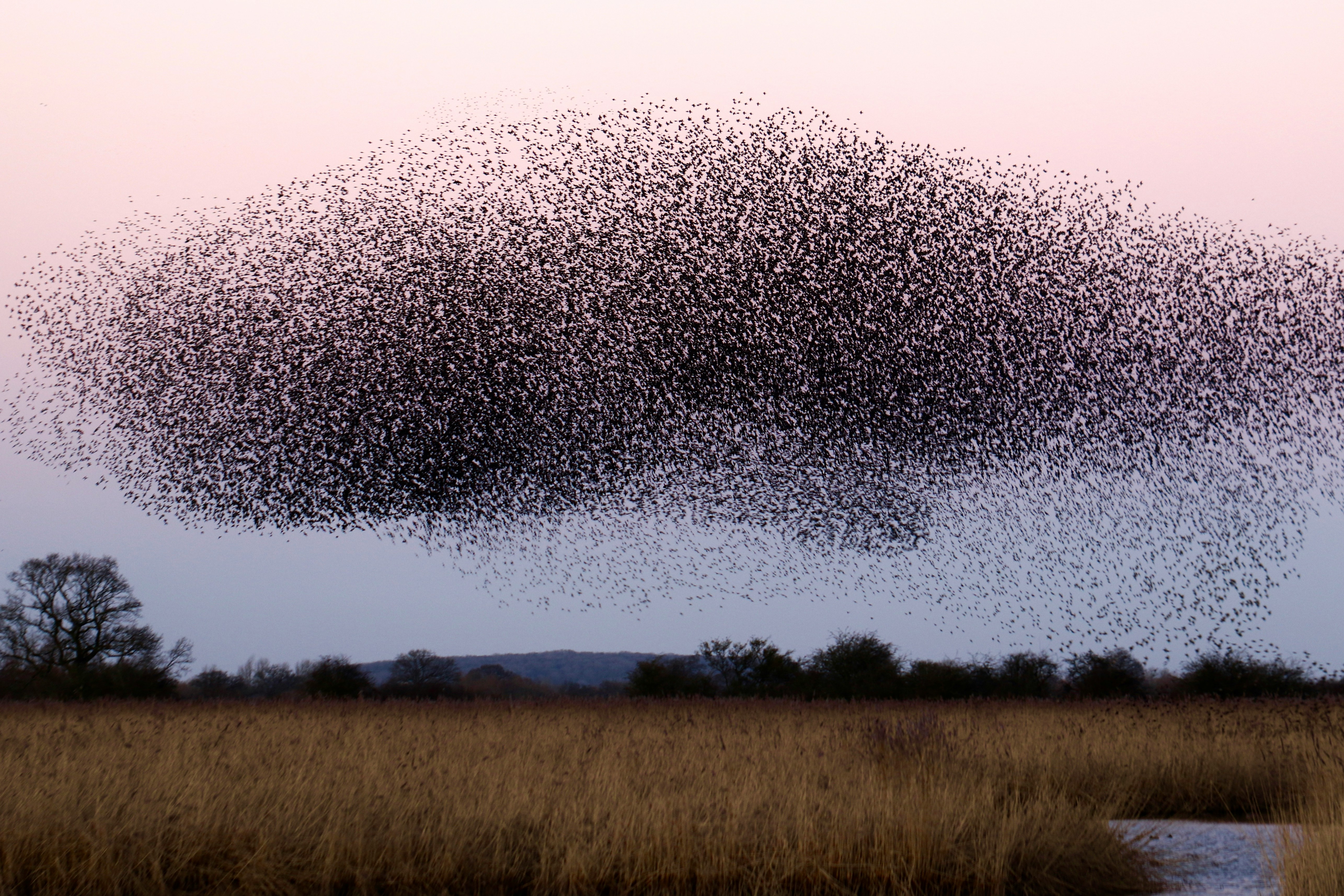
Think about a flock of birds in flight. Hundreds of birds can suddenly change direction, move closer together and then spread out again. From the ground, it looks almost perfectly coordinated.
There isn't a bird at the front telling the others where to go. There isn't a central controller making decisions for the flock. The behaviour we see emerges from the interactions between the individual birds.
It is a simple example, but it raises an interesting question for anyone who leads an organisation: could our organisations be more like a flock of birds than we sometimes assume?
That is one of the ideas explored in a recent masterclass on complexity sciences with Dr Neil Greenleey and Professor Chris Moles. It offers a useful challenge to the way we traditionally think about management.
A lot of management thinking starts with a fairly straightforward idea. If we understand the situation, make a good plan and put the right processes in place, we should be able to get the outcome we want.
There is obviously some truth in that - organisations need strategy, structure, processes and people who understand what they are trying to achieve; but anyone who has spent time leading an organisation will know that things rarely work quite that neatly.
You can make a decision with one team and see an unexpected reaction somewhere else. You can introduce a new process that looks sensible on paper and find that people use it in a completely different way. A small change can sometimes have a surprisingly big impact, while something that seemed important can make very little difference.
The problem isn't necessarily that people aren't following the plan. It may be that the organisation is behaving like a complex system and complexity changes the way we think about leadership.
Complexity science gives us another way of looking at organisations. Rather than thinking of an organisation as a machine, where each part has a defined role and the whole thing can be controlled from the top, we can think about what happens between the parts.
People interact, they respond to one another, they adapt to what is happening around them, and from all those interactions, patterns of behaviour can emerge.
This is where the example of the flock becomes useful: the flock's movement isn't being dictated by a single bird, it comes from the behaviour of the birds and their relationships with one another. There is a similar dynamic in organisations.

Culture, for example, isn't simply something a leader can announce. You can write down a set of values and put them on the wall, but what people actually experience is shaped by what happens every day: how colleagues behave, how decisions are made, how people respond to problems and how teams interact.
In that sense, some of the most important things happening in an organisation aren't necessarily being controlled by anyone. They are emerging and leaders are part of the flock.
There is another part of this idea that is particularly interesting. If organisations are complex systems, then leaders aren't standing outside the system controlling it, they're in it. For example, a manager makes a decision and people respond to that decision. Their response affects someone else, that person changes what they do, which affects another team, and so on.
That can be an uncomfortable idea because we often talk about leadership as though the leader is looking at the organisation from above and deciding what needs to happen.
Complexity suggests something different. You can influence a system without being able to control it completely and recognising that difference can change the way you lead.
Book your call today
If you want to discuss online programme suitability, entry criteria, or how to create a successful application, our student success team is on hand to help.
Not everything has a straight line between cause and effect
One of the characteristics of complex systems discussed in the masterclass is nonlinearity. In simple terms, this means that the relationship between an action and its outcome isn't always straightforward. A small change can lead to a significant result. A major intervention might barely change anything.
Think about how often this happens in organisations; a conversation between two people can sometimes shift the direction of a project. A seemingly minor decision can have consequences months later. Equally, a major initiative can consume considerable time and resources without producing the change that was expected.
That doesn't mean planning is pointless, but it means we need to be realistic about what planning can and cannot achieve when we are dealing with people and constantly changing environments.

So what does a leader actually do?
If you can't control everything, what does leadership look like? We must ask these questions to get better at understanding what is happening:
1) What relationships are influencing the situation?
2) What behaviours are emerging?
3) Where are people responding differently to what was intended?
4) What is changing around the organisation?
5) What part are you playing in all of this?
These aren't necessarily questions that produce an immediate answer, but they can help a leader see the organisation differently.
Instead of assuming that every problem has a solution that can simply be designed and implemented, you start to pay more attention to patterns, relationships and interactions.
Leadership in a complex world
The world leaders are operating in isn't becoming simpler. Technology, markets, organisations and people are increasingly interconnected, so change in one area can quickly affect another - often in ways that are difficult to anticipate.
That makes the ability to think about complexity increasingly valuable, recognising that an organisation is made up of people who are constantly responding, adapting and influencing one another, and that some of the outcomes we care most about emerge from those interactions.
Going back to the flock of birds: coordination doesn't always come from having someone at the centre controlling every movement, and for leaders, that's a useful distinction.
Sometimes the challenge is simply understanding what is already happening within the system and knowing where your influence can make a difference.

Am I Eligible
Take our Questionnaire to find out if you are eligible for the programme.


